


Iris Species & Hybrids
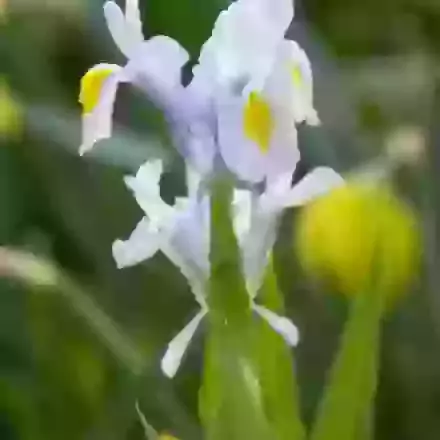
Iris Species and Hybrids are lovely dwarf iris and include a diverse range of elegant flowering plants prized for their intricate blooms, rich colouring, and graceful form.
Best in sunny, well drained position.
-
Half-Price Iris Reticulata Special Offer
CAM63
In this discounted offer for you, de Jager has brought together five distinctive varieties:
Alida
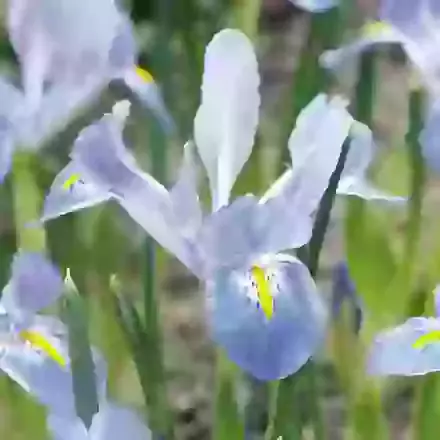
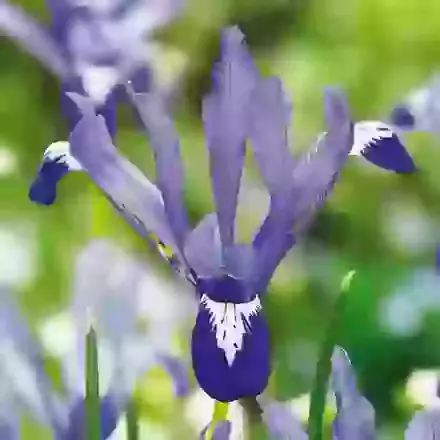
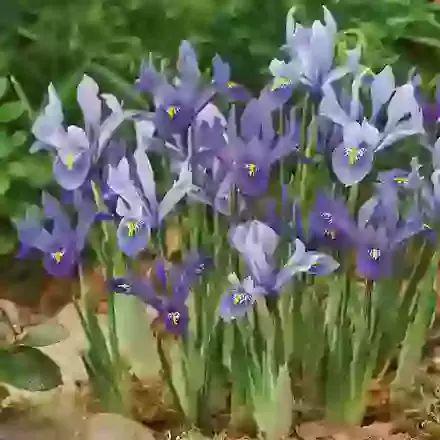
Magical Iris reticulata are some of the first bulbs to flower in late winter and pale blue ‘Alida’ is an excellent variety for adding a welcome splash of colour to the garden. Silky, sky-blue petals unfurl in February and March, Iris reticulata Alida features white and deeper blue flecks on their falls, with a contrasting, sunny streak of yellow.
North Star
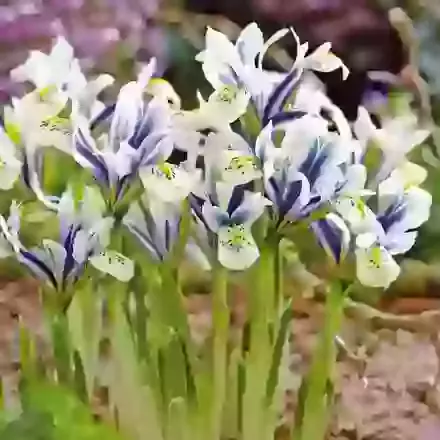
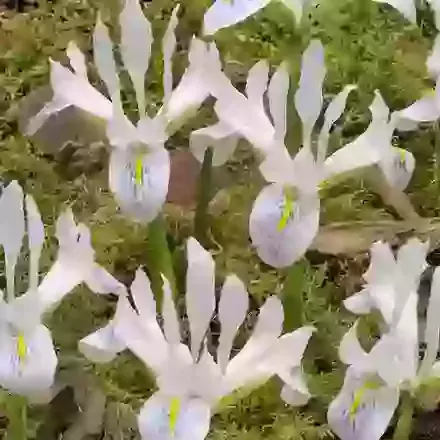
Produces elegant creamy-white flowers softly shading to warm yellow at the centre, with delicate blue spotting at the base of each bloom. The refined colouring of Iris reticulata ‘North Star’ brings freshness and subtle detail to early-spring pots, rockeries, alpine beds, and sunny garden borders.
J.S. Dijt
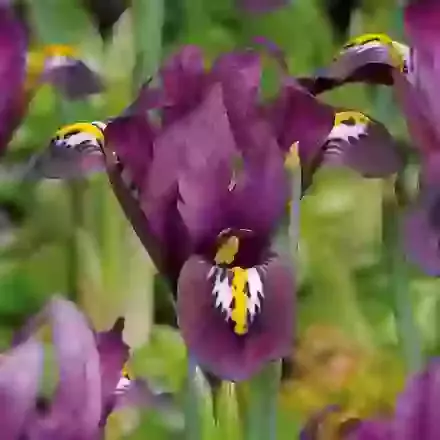
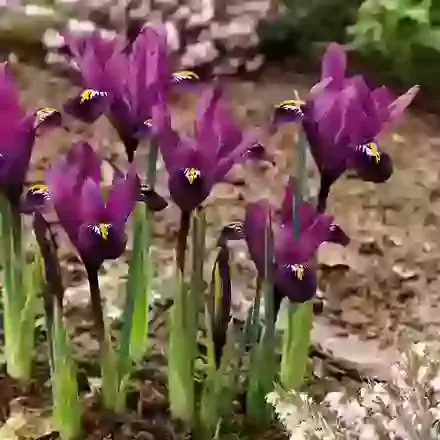
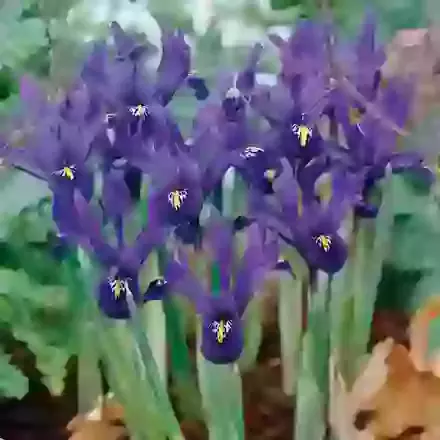
Perfect for adding a classy touch of rich, velvety colour to the garden in early spring. Grassy foliage appears in winter, from which the bewitching blooms appear in February and March. Petals of deep, opulent purple are splashed with a white blotch on their falls and a striking golden streak.
Pixie
A pretty and petite Iris, ‘Pixie’ belongs to the reticulata family and stands just 15 cm tall, making it an excellent choice for spring containers. The superb flowers bloom in an eye-catching shade of violet-blue, featuring a white patch and bright yellow mid-rib on their falls. Holder of the prestigious RHS Recommended Award of Garden Merit.
Polar Ice
‘Polar Ice’ produces elegant early-spring flowers with crisp white standards rising above icy blue falls, creating a cool and refined display in the late winter garden. The delicate blooms of Iris reticulata ‘Polar Ice’ appear bravely through February winds, bringing precious colour and detail to alpine troughs, rockeries, and sunny borders when little else is in flower.
-
Bucharica
M5591
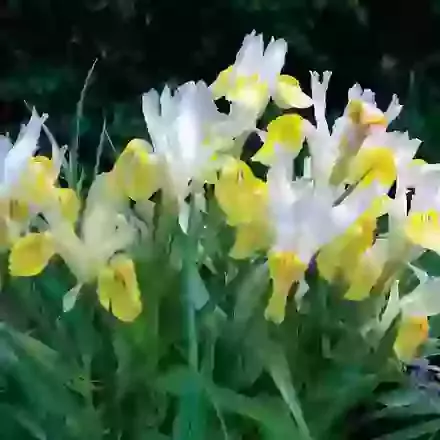
Exquisite Iris ‘Bucharica’ bears silky feathered blooms, consisting of upright ivory standards and golden-yellow falls, sometimes streaked in grey.
Part of the Juno group, this spectacular Iris Bucharica produces vigorous plants and flowers which are larger and later than most dwarf iris species, blooming in April on stems up to 35cm tall. The deep green lanceolate leaves are also broader than Iris reticulata and are produced up the stems.
Plant the bulbs in a position in full sun, into well-drained, moisture-retentive soil. Perfect for pots, rockeries, alpine gardens and sunny borders - plant in groups for impact.
-
Danfordiae
M5592
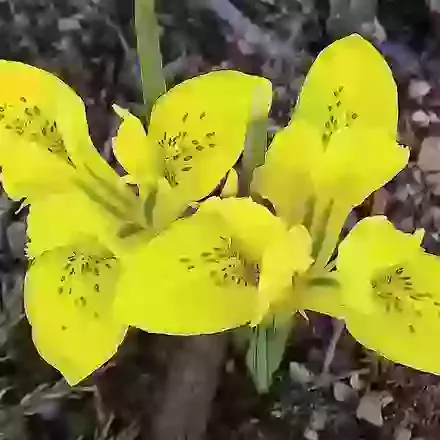
Part of the reticulata group of irises, Iris ‘Danfordiae’ is loved for its sunny disposition, bearing wide petals of bright yellow with small brown speckles.
The vivid flowers bloom during February, adding a splash of colour to spring pots, rockeries and alpine beds. The blooms produce a sweet scent which travels in the air on warmer days.
At a full height of just 10cm, Iris Danfordiae should be grown near the front of a border, in a spot where the cheery flowers will be seen and appreciated.
Plant the bulbs in autumn, in full sun and in any soil which is moist and well-drained.
-
Ret. Hoogiana
M5689
Iris 'Hoogiana' produces striking sword-like foliage topped with large sky-blue flowers that bring bold colour and delicate fragrance to the late spring garden. Flowering through May, the wide vibrant blooms of Iris hoogiana create a strong architectural presence in gravel gardens, alpine planting schemes, and sunny borders.
This elegant rhizomatous iris performs best in open sunny positions with dry winter conditions and moisture during spring growth. Well suited to free-draining soils, Iris Hoogiana adds structure, movement, and clear seasonal colour to contemporary and naturalistic planting alike.
-
J.S. Dijt (dijt)
M5605
Petite Iris ‘J.S. Dijt’ is perfect for adding a classy touch of rich, velvety colour to the garden in early spring.
Grassy foliage appears in winter, from which the bewitching blooms appear in February and March. Petals of deep, opulent purple are splashed with a white blotch on their falls and a striking golden streak.
Fill pots and window boxes with the bulbs in autumn and top with moss or gravel for a treat in spring when the flowers unfurl. Can be planted as part of a mixed display or bulb lasagne, forming the uppermost layer of bulbs, usually first to emerge.
Iris ‘J.S. Dijt’ is also excellent for rock and alpine gardens – plant in groups for an impactful, stylish show of colour.
-
Magnifica Alba
M5681
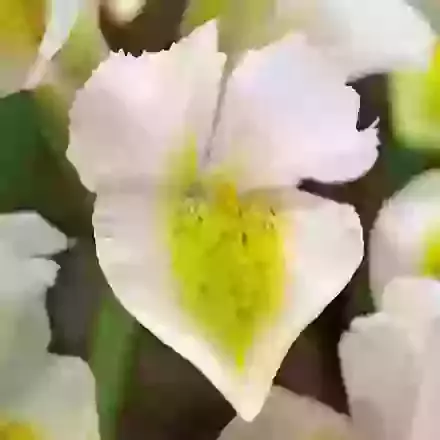
Iris ‘Magnifica Alba’ produces elegant crisp white flowers accented with soft golden midlines, rising above glossy green foliage in late spring. Flowering from late April into May, the refined blooms of Iris ‘Magnifica Alba’ bring a calm, luminous quality to borders, gravel gardens, and alpine-style planting schemes.
This cooler-toned form provides beautiful contrast among richer colours and stronger planting combinations, while its graceful habit suits naturalistic and contemporary settings alike. Best grown in a sunny position with freely draining soil, Iris ‘Magnifica Alba’ thrives with minimal disturbance and rewards with reliable flowering.
-
Purple Hill
M5622
The Iris Purple Hill enchants with lush purple petals, each adorned with striking yellow and white blotches on the falls. This regal flower exudes sophistication and grace, rich colours creating a dramatic focal point in any garden.
As it blooms, Species Iris Purple Hill infuses the landscape with a sense of luxury and splendour, inviting admiration and adoration. The unique interplay of colours on its petals enhances its allure, making it a true garden jewel.
-
Ret. Alida
M5606
Magical Iris reticulata are some of the first bulbs to flower in late winter and pale blue ‘Alida’ is an excellent variety for adding a welcome splash of colour to the garden.
Silky, sky-blue petals unfurl in February and March, Iris reticulata Alida features white and deeper blue flecks on their falls, with a contrasting, sunny streak of yellow.
Perfect for container displays, the bulbs can be layered with other spring blooming flowers for a long-lasting display and are ideal for rock gardens, where the large feathery flowers can be viewed up close and fully appreciated.
-
Ret. Blue Planet
M5627
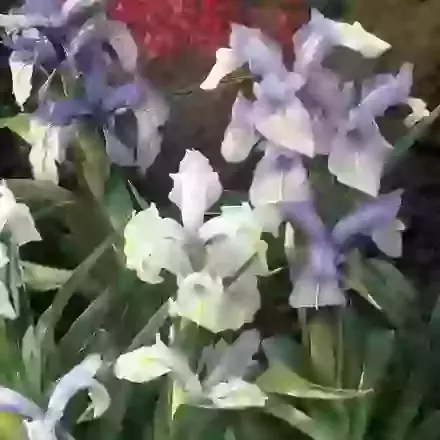
Pretty feathered blooms of baby blue unfurl during February and March on exquisite Iris ‘Blue Planet.’
Ideal for a soft pop of colour in pots, window-boxes and rock gardens so early in the year - the bulbs often push their way up through a bed of snow. Plant these garden gems where you can view their exquisite markings at close range – the lower petals feature darker veining and freckles, a touch of white and a lick of bold yellow.
Iris reticulata Blue Planet can be grown as part of a colourful spring display with other bulbs in the ground or in containers, in any well-drained neutral soil.
-
Ret. Clairette
M5440
Iris species reticulata Clairette is a charming dwarf Iris which looks like hand-painted Delftware, with neat brushstrokes of deep cobalt, soft lilac-blue and white.
These distinctive spring plants are perfect for filling containers with early colour and are great for rockeries and alpine gardens, thriving in any neutral soil which is well-drained.
The pretty patterned flowers of Iris Clairette bloom during February and March and look most striking in groups. Plant the bulbs where you will appreciate their fleeting beauty up close and ensure they are not overshadowed or smothered by larger plants. If planting in pots, use the containers to adorn a doorway, or raise them onto a garden table for enjoyment.
-
Ret. Eyecatcher
M5617
Iris reticulata ‘Eye Catcher’ produces charming early-spring flowers with beautifully detailed colouring and intricate markings. The delicate white falls are highlighted by golden crests and vivid blue spotting, while the upright white standards are finely striped with blue through the centre, creating a striking and elegant display.
Compact and easy to grow, the blooms of Iris reticulata ‘Eye Catcher’ are perfect for pots, alpine gardens, rockeries, and sunny spring borders where their intricate beauty can be admired up close. Flowering early in the season, this delightful iris brings colour and detail to the garden when little else is in bloom.
-
Ret. Harmony
M5604
The early flowers of Iris reticulata ‘Harmony’ bring a rush of rich colour, just when the garden requires it in February.
The royal-blue blooms feature feathery standards and falls decorated with a yellow and white blotch.
Small but striking, this bold little Iris reticulata ‘Harmony’ can be planted to naturalise in grass and will do well in a rockery or alpine border. The bulbs are also excellent grown in pots - place where the exquisite beauty and fragrance can be enjoyed.
Well-drained soil which remains moist in spring and a spot in full sun or dappled shade is essential for reticulata Iris to thrive.
-
Ret. North Star
M5625
Iris reticulata ‘North Star’ produces elegant creamy-white flowers softly shading to warm yellow at the centre, with delicate blue spotting at the base of each bloom. The refined colouring of Iris reticulata ‘North Star’ brings freshness and subtle detail to early-spring pots, rockeries, alpine beds, and sunny garden borders.
Compact and easy to grow, this charming dwarf iris flowers early in the season, adding gentle colour and intricate patterning when the garden is just beginning to awaken from winter.
-
Ret. Pixie
M5601
A pretty and petite Iris, reticulata ‘Pixie’ belongs to the reticulata family and stands just 15cm tall making it an excellent choice for spring containers.
The superb flowers bloom in an eye-catching shade of violet-blue, featuring a white patch and bright yellow mid-rib on their falls.
Closely related to popular iris reticulata ‘Harmony,’ this exquisite variety has been recognised by the RHS with an Award of Garden Merit for plant excellence and reliable qualities.
The bulbs should be planted in autumn, in a spot which receives plenty of sun and in moisture retentive, well-drained soil. Great for alpine and rock gardens.
-
Ret. Polar Ice
M5688
Iris reticulata ‘Polar Ice’ produces elegant early-spring flowers with crisp white standards rising above icy blue falls, creating a cool and refined display in the late winter garden. The delicate blooms of Iris reticulata ‘Polar Ice’ appear bravely through February winds, bringing precious colour and detail to alpine troughs, rockeries, and sunny borders when little else is in flower.
Best grown in gritty, well-drained soil with dry summer conditions, this compact dwarf iris thrives in bright open positions where its intricate colouring can be admired up close. Each flower offers a quiet yet striking spectacle at the very start of the gardening season.
-
Harmony & Alida Mix
M5630
A harmonious pairing of two exquisite blue dwarf Iris. Blooming in tandem during February and March, this mixture includes the bulbs of soft blue Iris ‘Alida’ and royal blue ‘Harmony.’
With both varieties reaching a dainty 15cm in height, this pretty mix is ideal for planting near the front of a mixed border, in rockery gardens and spring container displays.
Plant the teardrop bulbs in moisture-retentive soil in full sun. Ensure the ground or your potting mix is able to drain well, especially during the winter months as waterlogging can lead to rotting.
Planting in groups and swathes creates a natural and impactful display.
-
Reticulata Special Mixture
M5603
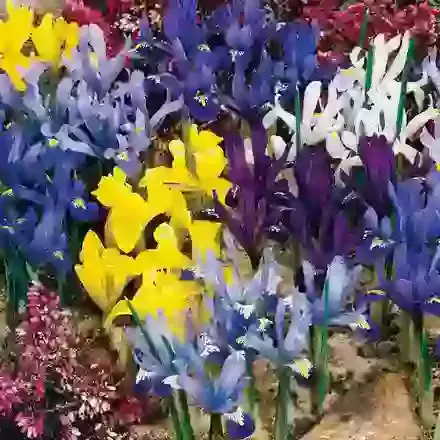
A superb mix of Iris reticulata varieties, with colours ranging from the softest blue through to the richest deep purples. All feature distinctive and attractive markings on their falls such as a sweep of vibrant yellow, blue flecks and finely painted veining.
The bulbs should be planted in autumn, into any well-drained soil in full sun. Ideal for colourful container displays, the flowers bloom during February and March at a height of 15cm.
Place pots where you can view the delicate flowers and their exquisite markings and colours up close – a garden tabletop, window box or near a doorway you pass through often are perfect spots.